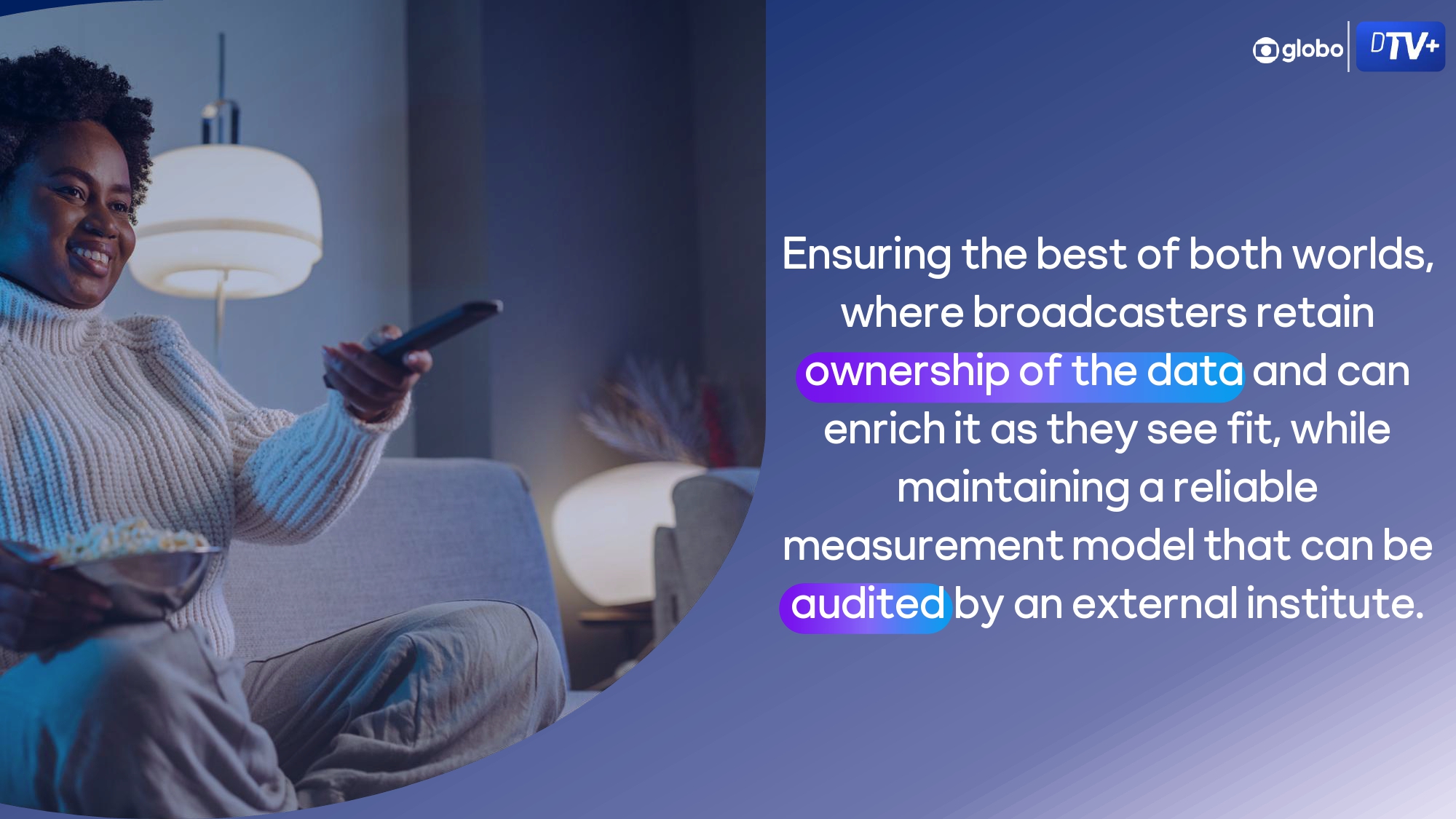

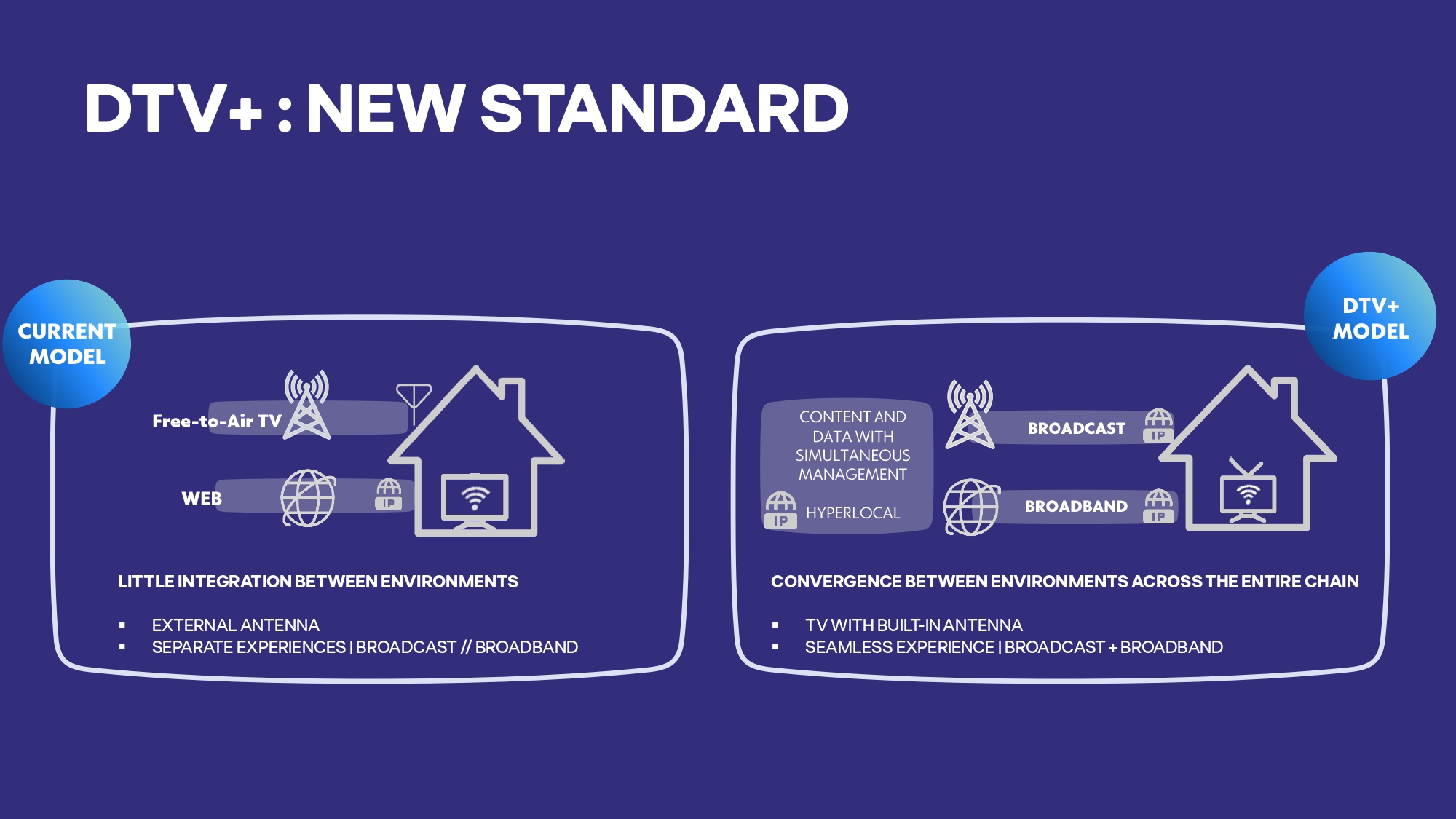
Globo, Brazil’s largest commercial TV group, is rolling out DTV+, a next-generation free-to-air TV standard designed for connected TVs. It brings broadcast channels into the TV operating system, with app-like navigation, login and interactive layers placed directly on top of live programming.
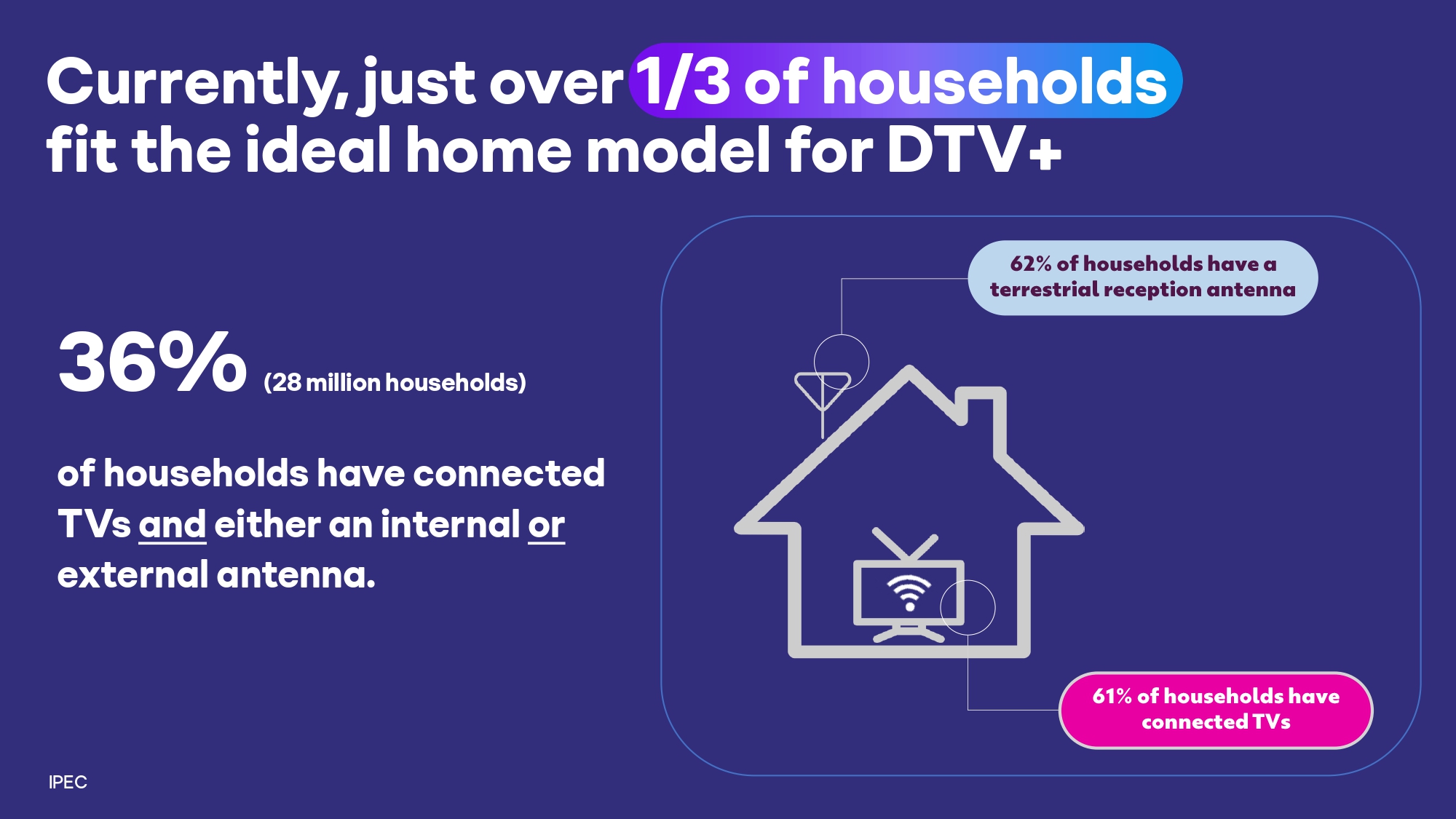
The move fits Brazil’s viewing reality. Linear TV accounts for 57.9% of total video consumption (Dec 2024, Kantar IBOPE Media, Brazil’s TV measurement currency). Connected-TV household penetration reaches 72% (2024), and internet consumption via TV has more than doubled over the last five years (CGI.br, Brazil’s internet governance body).
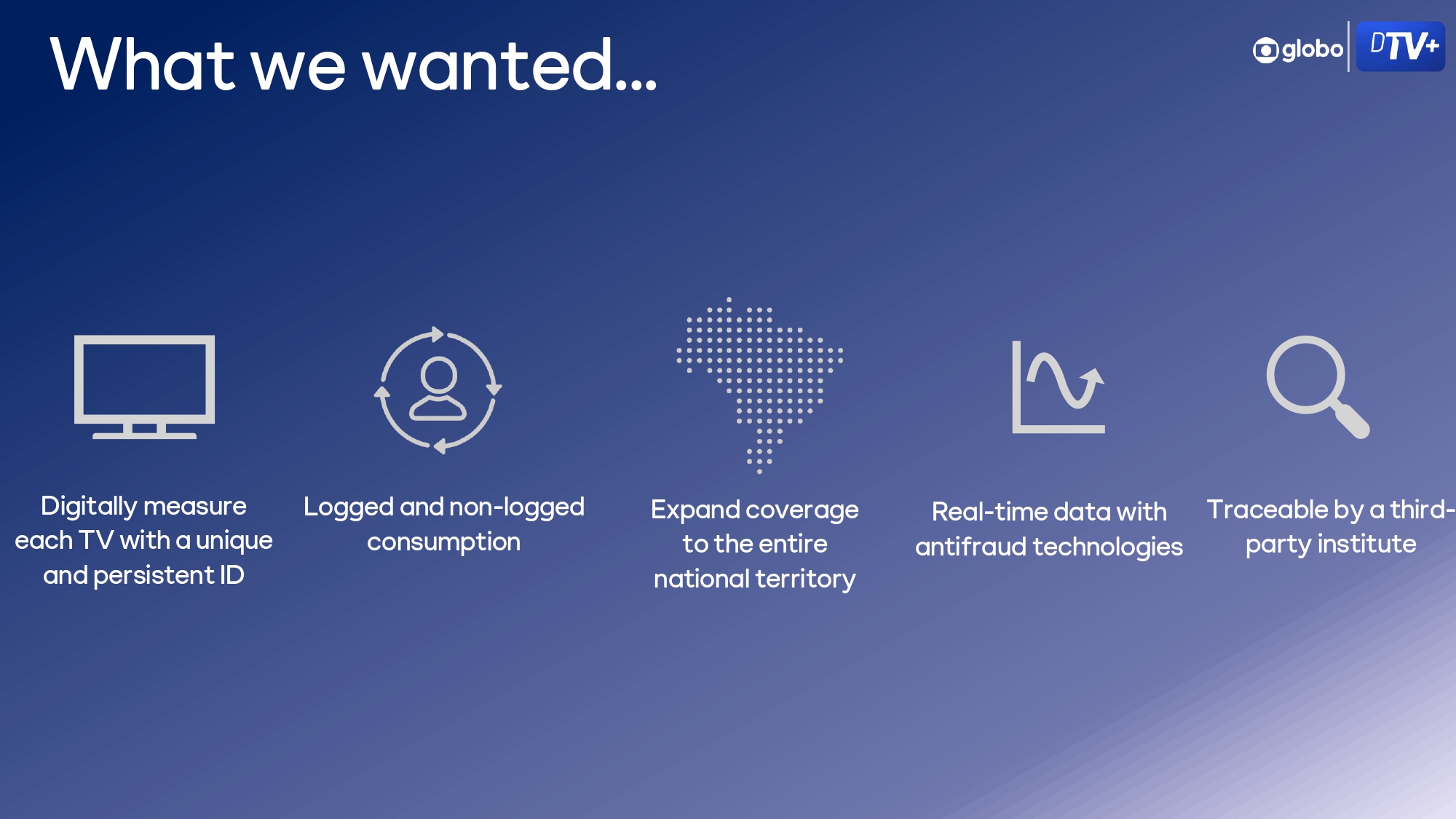
Turn free-to-air TV into a logged, interactive home-screen experience
DTV+ makes free-to-air TV easier to find, open and use, with app-style navigation on smart TVs, while login supports authenticated viewing and richer interaction.

It builds on Brazil’s digital TV upgrades since 2007, including a 2020 update that brought HDR and immersive audio, plus an interactive middleware layer (DTV Play). In other markets, similar transitions are often grouped under labels such as NextGen TV or “TV 3.0”.
On compliant TV sets, DTV+ brings free-to-air TV to the main screen, with familiar app-style behaviours such as opening from the home screen and pinning favourites. Login supports authenticated viewing and a clearer audience profile, while recognising that TV is often watched by more than one person in the room.
In entertainment, the on-TV voting model is illustrated through “Big Brother”, the long-running global reality TV format, where participation can sit on the TV screen rather than shifting viewers to a second device.
And on the reach side, Globo references around 140 million Globo ID accounts, with payment details held for a subset through subscriptions and other services.
Package advanced ads and interactive formats inside live TV
Globo’s proposition turns standard breaks and live moments into products that can be sold with dynamic ad insertion, geographic targeting and built-in interactive units. For instance, in news programming, the format catalogue includes sponsor-branded utility overlays, such as currency-rate information carried with a financial services partner.
DTV+ is designed to support dynamic ad insertion (DAI) at free-to-air scale and geographic targeting, including the option to run different ads in different parts of a large city during the same break. This creates a route to addressable offers that can work for smaller advertisers as well as national brands.
The SMB market context is framed as a USD 5.3bn “Digital + TV for SMBs” addressable market, split into USD 3.2bn for digital ads for SMBs and USD 2.1bn for TV ads for SMBs.
The format layer is presented as a catalogue that can be packaged across genres, including sports overlays (statistics, highlights and voting) and sponsored interactivity such as quizzes using QR-code coupons.
During live football, a ‘Craque do Jogo’ (‘Player of the Match’) panel can open on the right side of the screen while the match continues. Viewers answer the on-screen prompt ‘Quem é o Craque do Jogo?’ (‘Who is the Player of the Match?’) and vote from a list of players using the remote

Commerce is treated as another activation format, using on-screen prompts that can hand over to a QR “shopping cart”, support one-click confirmation on TV, or allow completion on mobile with the same Globo ID.

For instance, in drama or entertainment scenes, clickable markers can appear on objects, and selecting one opens a product card on screen. In the example shown, the viewer sees ‘Relógio de Couro’ (‘Leather Watch’) priced at R$ 899 (Brazilian reais) with a ‘COMPRAR’ (‘Buy’) button and a cart icon, so interest can move into a basket without leaving the programme.
Scale from pilots to rollout and extend beyond spot sales
The rollout path moves from city pilots towards broader market availability, while also adding service-led revenue lines such as datacasting alongside media inventory.
Commercial selling is planned around the 2026 FIFA World Cup. On top of this, Rock in Rio, the large Rio-based music festival, illustrates how DTV+ can carry immersive audio and enhanced viewing features, as viewers were able to select an immersive mix, including one that brings the crowd sound forward.
Globo – DTV+ – 1
Globo – DTV+ – 2
Globo – DTV+ – 3
Globo – DTV+ – 4
Globo – DTV+ – 5