

Considering FMCG has been one of the hardest categories to convert to audio, P4 Radio Group decided to build evidence that would change that, starting with Norway’s largest FMCG advertiser.
Why FMCG
P4 Radio Group is Norway’s largest commercial radio operator, holding a 65.7% share in the commercial radio market (commercial radio reaches 85% of the Norwegian population). Despite that scale, FMCG remained one of the most under-represented advertiser categories in audio, a pattern P4 set out to change.
The radio group identified a compelling case to anchor their approach. In 2018, Procter and Gamble acknowledged publicly that heavy investment in digital media had weakened the emotional connection between brands and consumers. By 2022, P&G had responded by increasing their US radio spend, making the company the largest single advertiser on American radio. P4 used this as the opening of a structured commercial conversation with Orkla, Norway’s biggest FMCG advertiser, to make the case for audio investment.
A Study Built Around the Questions Planners Ask
Rather than relying solely on reach arguments, P4 proposed addressing the questions that FMCG planners need answered. Working with Orkla and independent research firm Penetrace, they built a study around three Orkla products, none of which had previously advertised on the radio, each with established TV presence and strong brand recognition:
- Grandiosa Delux – Norway’s most iconic frozen pizza
- OMO Colour – a leading household washing powder
- Moller’s Tran – Norway’s best-known fish oil supplement
Radio was allocated 18 to 25% of each campaign’s net media budget, running alongside TV, online video, social media and cinema. The radio creatives mirrored the TV executions in tone and music, with additional product information layered in to extend rather than duplicate the message.
Post-campaign, Penetrace surveyed 700 respondents per test. Crucially, the sample was split between those who recalled the TV campaign only and those who recalled both the TV and radio campaigns. That separation allowed the study to isolate radio’s specific contribution across four core questions: does radio provide additional coverage, increase recall, strengthen brand associations, and increase sales?
What the Evidence Showed
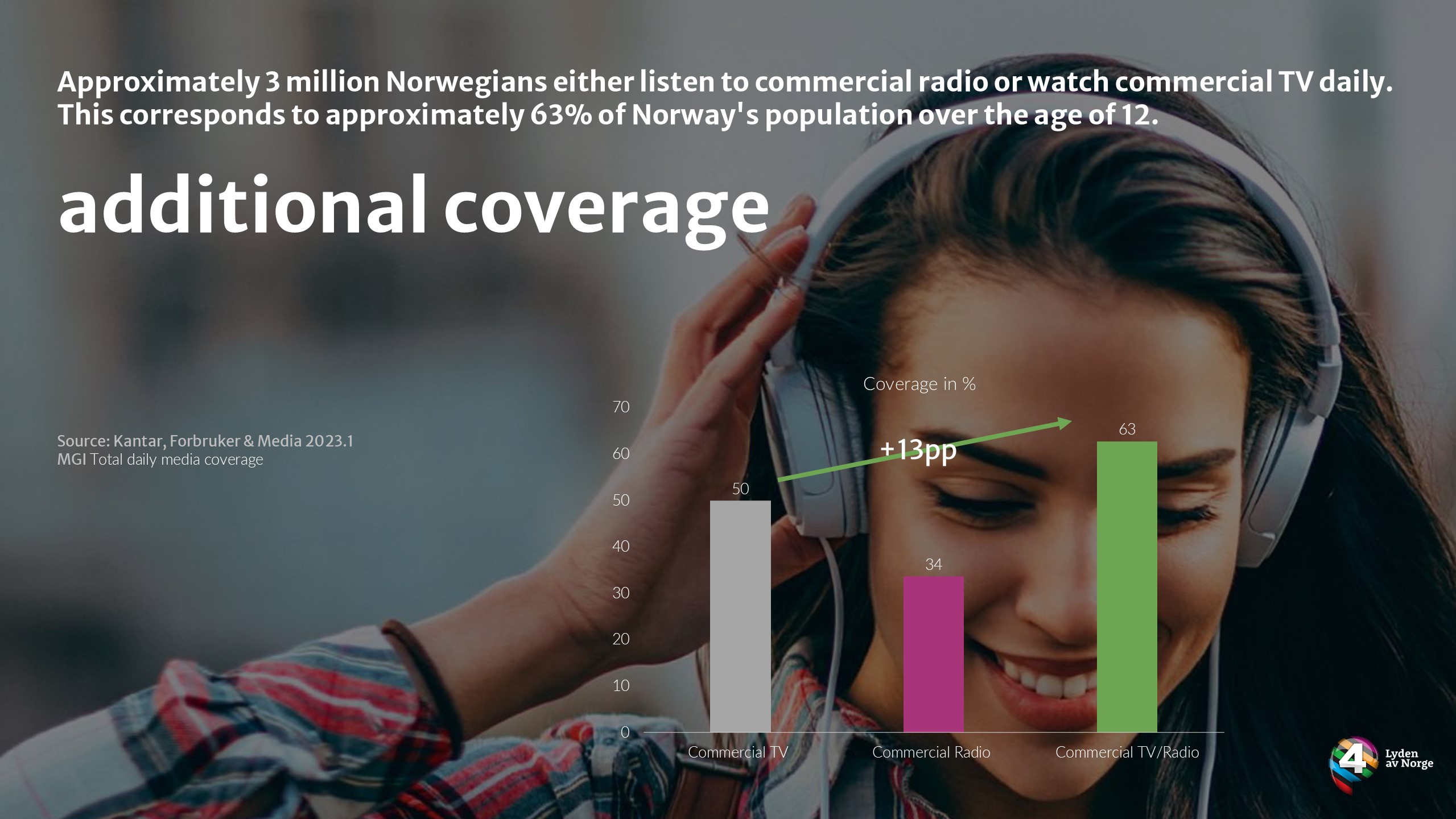
- Coverage: Adding radio to a TV-led plan increased daily coverage from 9% to 62.7% of Norwegian adults aged 12 and over, reaching audiences neither medium can capture alone.
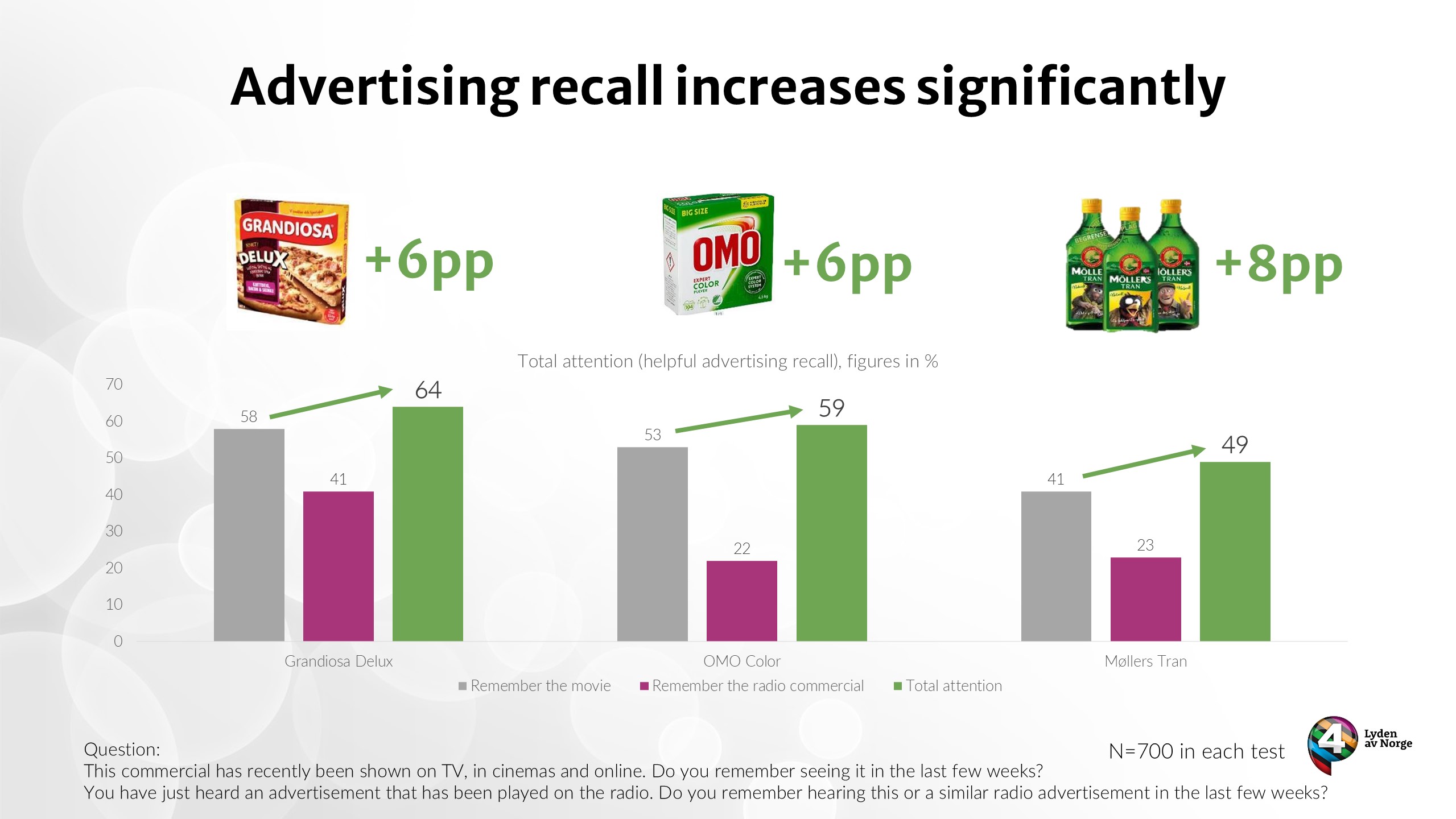
- Recall: Combined advertising recall increased significantly across all three products. Audiences exposed to both TV and radio remembered the campaigns at measurably higher rates than those who saw TV only.
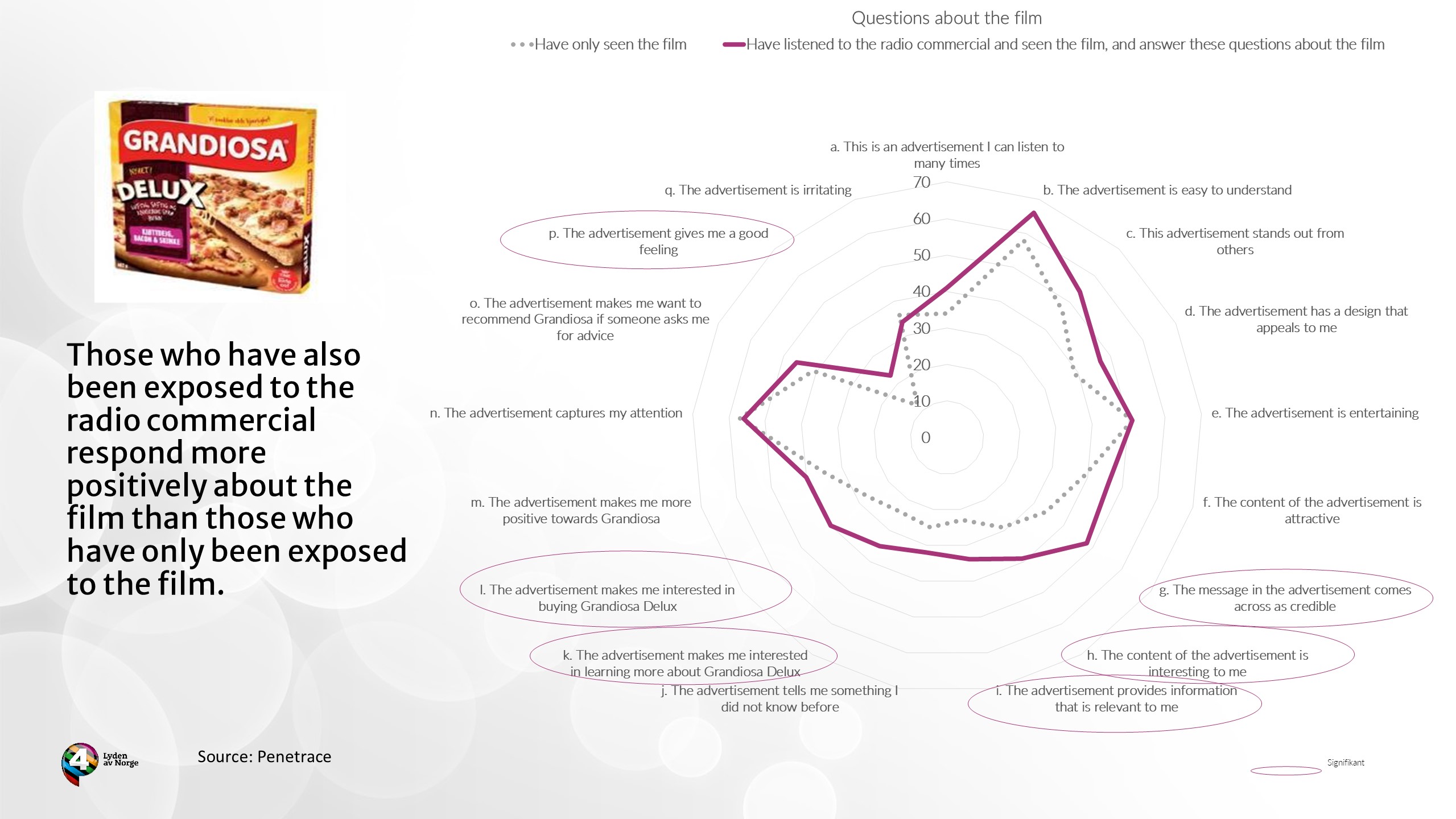
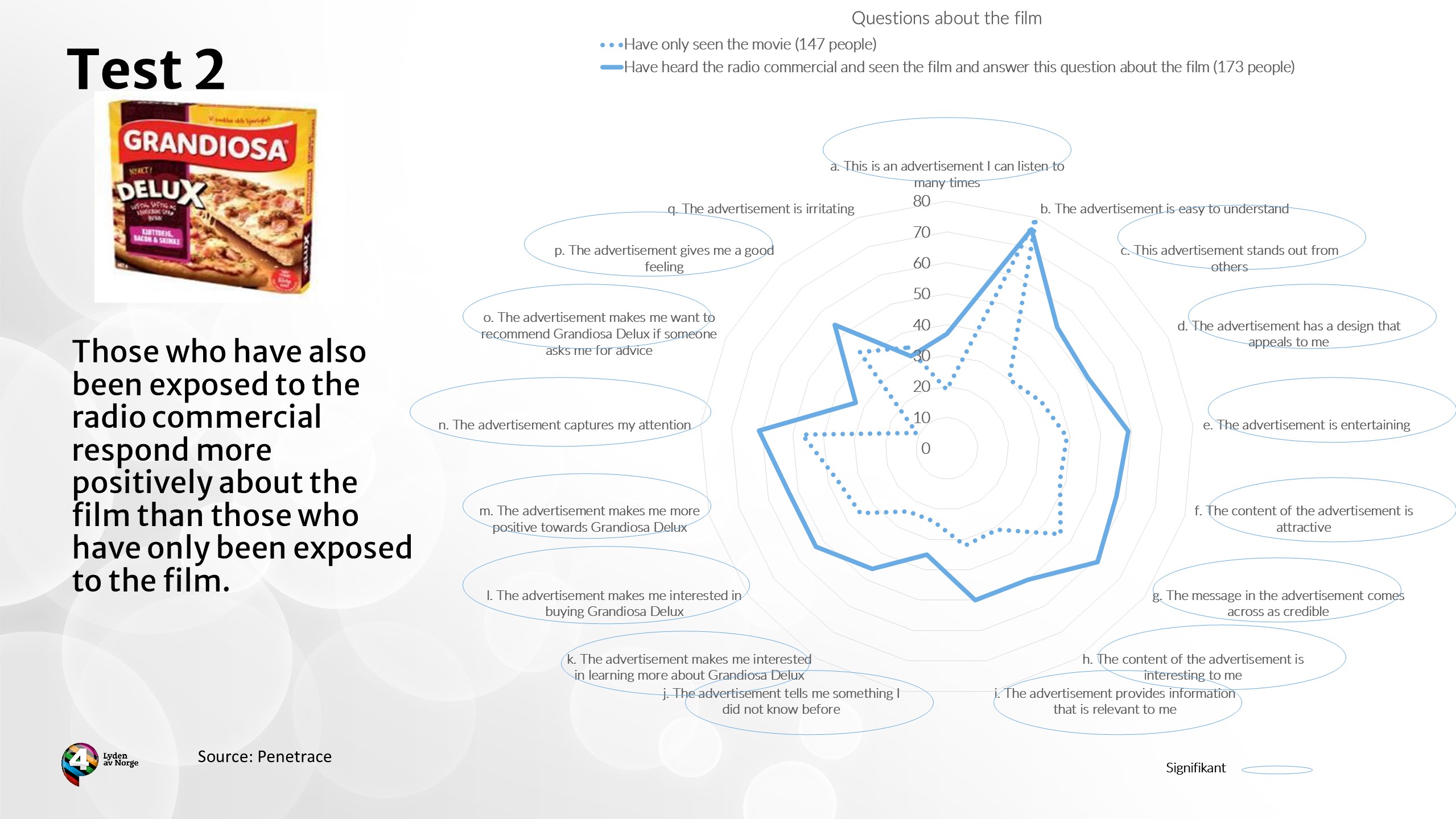
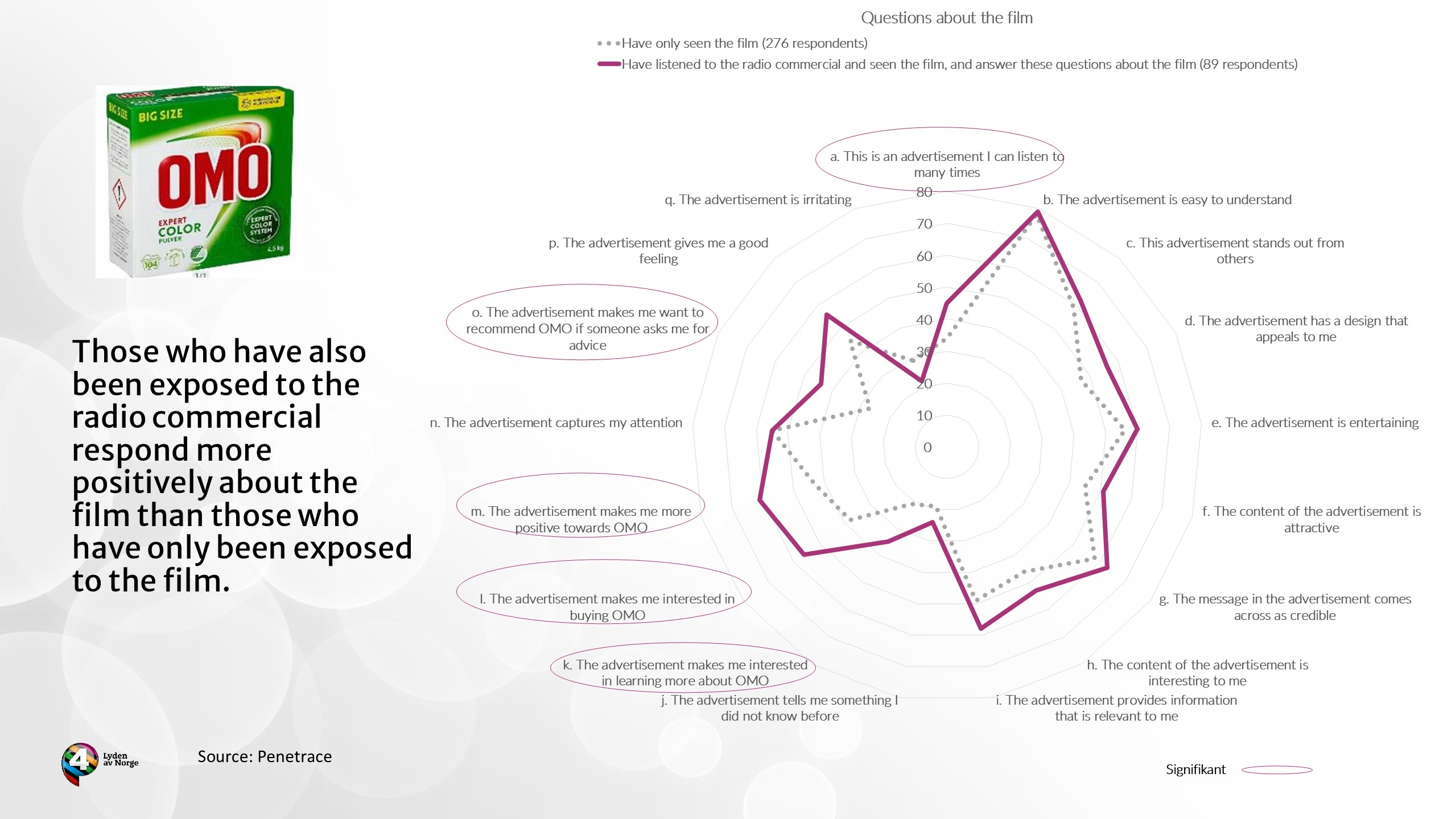
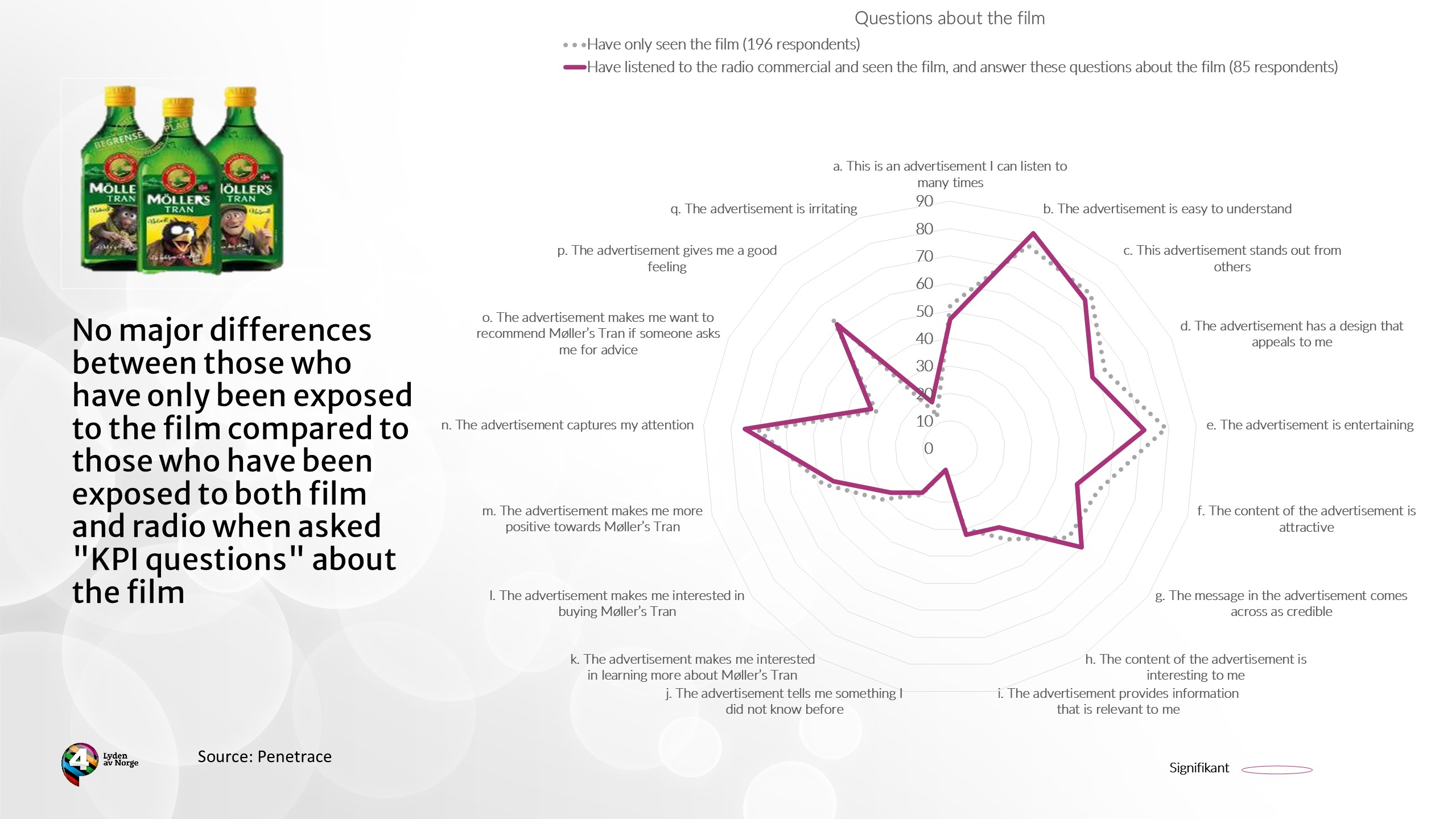
- Brand Associations and KPIs: Respondents who recalled both TV and radio scored consistently higher on key brand metrics, including credibility, purchase intent, brand sentiment and recommendation intent, compared to those who recalled just TV:
– In the second Grandiosa Delux test, the combined group scored higher on 16 of 17 KPIs.
– For OMO Colour, significant improvements were recorded on five key measures.
– Moller’s Tran initially showed no meaningful KPI differences, a finding traced to a creative execution that prioritised entertainment over message clarity. When Orkla revised the approach, the results recovered. It is a useful reminder that the medium does not do the work alone. - Sales: Purchase rates among those recalling both TV and radio were significantly above those recalling TV only across all three products.
From One Advertiser to a Category Framework
The study gave Orkla the confidence to commit to audio at scale. The advertiser now invests more than ten times its original spend with P4. Smaller FMCG clients in Norway have followed, and the methodology P4 developed is now a replicable framework for demonstrating the commercial value of audio to the broader FMCG category.
As linear audiences decline and digital media continues to struggle with emotional brand-building, a study that independently quantifies radio’s contribution to recall, brand KPIs and purchase behaviour offers clients something concrete to act on.
The data points to a clear conclusion. For FMCG brands already investing in TV, radio is not an optional addition to the plan. It is the channel that makes the TV investment work harder, improving recall, strengthening brand KPIs and lifting purchase rates in ways that TV alone does not deliver.
This case was presented at our 2025 Marketing & Sales Meeting in Helsinki. Watch the full presentation here.